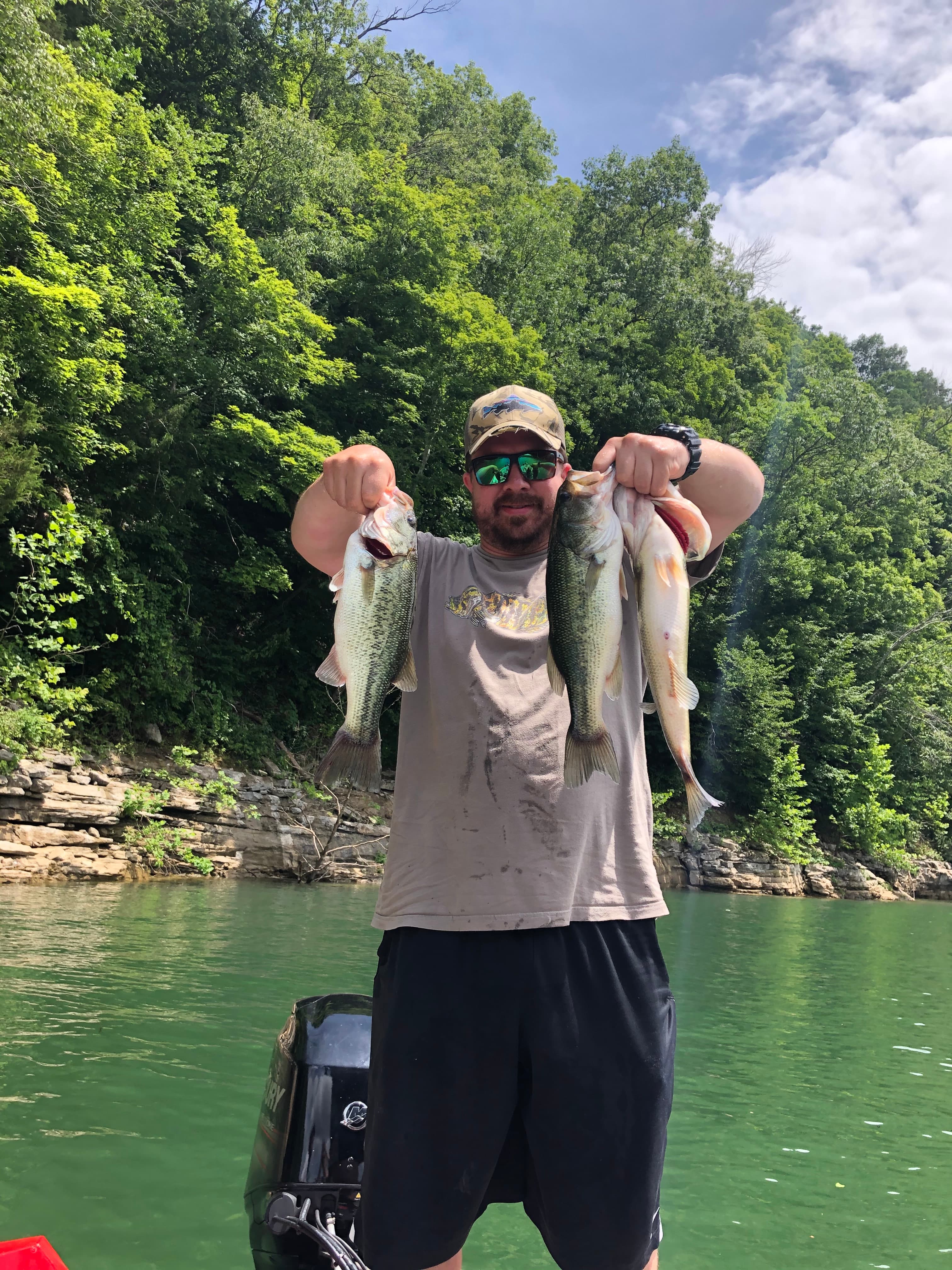
Summer Fishing on Lake Cumberland
Structure, thermoclines, and the art of fishing when the lake is loud
Structure vs. Cover (Speaking the Same Language)
Structure
The shape of the lake bottom: points, ledges, humps, channel swings, saddles, creek mouths, bluffs. It doesn't move. Structure is your GPS.
Cover
The stuff on/around structure: brushpiles, laydowns, docks, marina floats, boulders, shade lines. Cover is your "stop sign."
The Big Summer Driver: Stratification + Thermocline
By early-to-mid summer, Cumberland forms layered water: a warm upper layer (epilimnion), a sharp transition zone (metalimnion/thermocline), and colder deep water. In clear, lower-fertility lakes like Cumberland, the thermocline is often deeper than people expect—typically starting around 30 ft.
The Summer Migration Timeline
Phase 1: Post-Spawn Decompression
Late May into June • Upper 60s to mid 70s°F
Bass are tired, skinny, and opportunistic. They slide out of bedding pockets and stop at the first good cafeteria they hit.
- • Secondary points in creeks (first "pointy things" outside spawning pockets)
- • Channel swings in the backs/centers of creeks
- • Transition banks (rock changes, chunk rock to gravel)
Phase 2: Early Summer Split Shift
June into early July • 70s climbing
Bass start running a two-shift schedule. Feeding windows compress as water temperatures climb.
Low Light (Early/Late)
Slide shallower to feed on points, bluffs, creek mouths
Midday
Slide back to deeper structure near the thermocline
Phase 3: Thermocline Living (The Dog Days)
July into August • Peak heat
This is the "stop pretending they're everywhere" phase. Bass get more depth-banded and more bait-governed.
- • Main-lake and lower-end points with deep water close
- • Ledges & breaks near the river/creek channel
- • Humps and saddles that top out near the "right" depth band
- • Steep bluffs + shade (especially near marinas, pockets, or bait)
The Cumberland Rule: If you're not around (a) a depth edge or (b) a bait edge, you're basically sightseeing.
Phase 4: Late Summer / Pre-Fall
Late August into early September
Bass start acting less depth-locked and more location-locked around food routes.
- • Creek mouths and first third of creeks (where shad migrate)
- • Wind-blown points (wind = oxygen + plankton + bait positioning)
- • Shade-based targets: docks, marina edges, overhangs
Boat Activity & Summer Pressure
Cumberland is a summer recreation machine. That changes bass fishing in two main ways:
1. Compressed Bite Windows
- • Better early (before the lake wakes up)
- • Better late (when traffic tapers)
- • Better deep (where surface chaos is muted)
2. Shallow Fish Behavior Changes
- • Shallow fish become more timing-dependent
- • Shade-dependent behavior increases
- • Some fish simply vacate high-traffic zones
Night Fishing: The Pressure Valve
Night fishing isn't just "daytime but darker." It's a completely different game that can be the key to summer success on Cumberland.
Why It Works
- • Less boat traffic
- • Stable shallow feeding
- • Fish use lateral line + silhouettes
How It's Different
- • Fish shallower than at noon
- • Targets = feel + angle + shoreline
- • Bite detection shifts
Best Baits
- • Big profile, slow speed
- • Worms, jigs, spinnerbaits
- • Sound/vibration > paint jobs
Key Summer Areas on Lake Cumberland
High-Percentage Structure
- • Main-lake points (near the river channel)
- • Ledges/breaks (depth changes adjacent to channels)
- • Creek mouths (funnel bait + hold fish)
- • Bluff walls (vertical access, shade lines)
- • Humps/saddles (near thermocline band)
Best Cover to Combine
- • Brushpiles/fish attractors
- • Laydowns on steep banks (shade + ambush)
- • Marina edges/dock shade
- • Shade lines (bluffs, trees, overhangs)
The Cumberland Summer Day Game Plan
Chase active fish—points, bluff shade seams, bait activity
Structure fishing in the thermocline band
Fish deeper, fish shade, or come back at night
Shallow-to-mid structure with big, slow baits