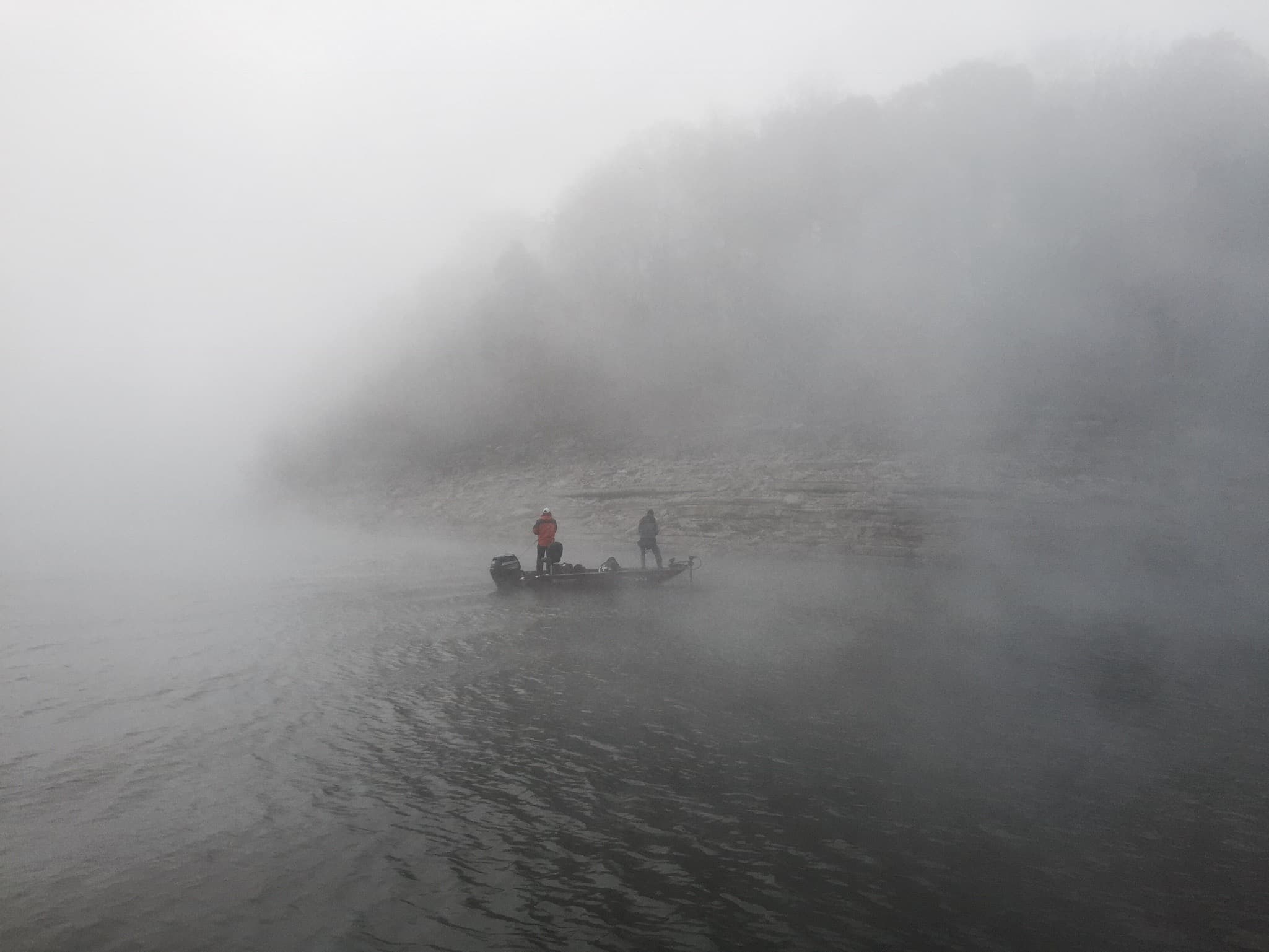
Winter Fishing on Lake Cumberland
The "slow-food season" — finding the few places that stay comfortable and food-adjacent
Winter on Cumberland isn't about "finding bass everywhere." It's about finding the few places that stay comfortable and food-adjacent—then fishing them like you're trying to pick a safe in a dark room: slow, precise, and patient.
Structure vs. Cover (Quick Refresher)
Structure
The shape of the lake bottom: points, channel swings, bluffs, ledges, humps, saddles, creek mouths.
Cover
The stuff sitting on structure: laydowns, brushpiles, docks, rock piles, shade lines.
In winter, structure gets you close. Cover gets you paid.
The Winter Drivers That Matter on Cumberland
1. Water Level Drawdown Changes the Whole Map
Cumberland is operated for flood control/power, and it's normally drawn down into a winter pool. The lake is gradually drawn down to a targeted winter pool elevation of ~695 ft by January.
Fishing impact: Drawdown removes shallow cover, pushes bait and bass closer to steep banks, channel edges, and remaining deep cover.
2. Cooling + Fall Destratification Resets the Lake
Cumberland's summer stratification ends when the lake destratifies in mid- to late-November.
Fishing impact: After turnover + true winter cooling, bass consolidate and the bite becomes more window-based.
3. Cold Temps Reduce Willingness More Than Ability
Telemetry studies have tracked adult largemouth through winter and found fish remained active even with temps as low as 43°F, but moved less during colder weather.
Fishing impact: You're not "waiting for them to wake up." You're presenting something they can eat without burning calories.
The Winter Timeline (Cumberland Version)
Late Fall Cool-Down
(Nov into early Dec)What's happening: Turnover ends, bait reorganizes, bass stop roaming shallow flats and start living on edges.
Where They Slide To First:
- • Creek mouths and the first third of major creeks
- • Main-lake points near deep water
- • Bluff banks where bait can suspend and bass can pin them
True Winter Set
(Dec into Jan)This is when Cumberland becomes a "locations, not areas" lake.
Spotted Bass
Schooling on shad near bluff banks and transitional structure, better feeding during warmer parts of the day.
Largemouth
Deep structure close to channels/points; usually need slower presentations.
Smallmouth
Winter is "arguably the best time" for reservoir smallmouth. Low-pressure weather can improve the bite.
Highest-Percentage Winter Areas:
Cover That Actually Matters Now:
- • Wood on steep banks (laydowns along bluffs/pockets)
- • Any remaining brush on those same structures
Late Winter / Pre-Spawn Setup
(Feb into early Mar)You're not in spring yet—but the fish start "practicing."
What Changes:
- • Feeding windows lengthen slightly (especially afternoon)
- • Smallmouth get more catchable on finesse + float-and-fly approaches
- • Float-and-fly often peaks in February on Cumberland
Where to Focus:
- • Main-lake banks/points near deep water
- • Transitions (chunk rock to gravel, bluff-to-45° banks)
- • Secondary points in larger creeks (closest to main lake)
"Where Do I Start?" — A Simple Winter Search Algorithm
Pick a Zone
Mid-lake to dam is usually more stable/clear; big creeks with deep mouths are money.
Find Bait
If you don't see shad on electronics, don't get romantic about that structure.
Marry Vertical + Food
Bluff at a creek mouth, channel swing, or point that drops into the channel.
Add Cover
A few laydowns, brush, or rock irregularities on that structure.
Fish Slow Enough to Be Annoying
Winter fish often tell you "yes" only after you've made the bait painfully easy.
One Cumberland-Specific Truth to Keep You Honest
Winter isn't about fishing more water. It's about fishing better water:
- ✓Deep access + vertical structure + nearby bait
- ✓Plus a realistic appreciation that drawdown re-wires the shallow game